Ignoring serious health symptoms can delay diagnosis and increase the risk of complications. While minor illnesses often improve with rest and home care, certain warning signs indicate the need for immediate medical attention. Recognizing these symptoms early and consulting a qualified doctor can make a significant difference in treatment outcomes and recovery.
Whether the issue involves sudden chest pain, difficulty breathing, severe abdominal pain, or neurological symptoms, prompt medical evaluation helps identify the underlying cause before it becomes life-threatening. At ABC Hospital, our experienced medical team provides comprehensive emergency and specialty care to diagnose and treat critical conditions without delay.
Why Early Medical Attention Matters
Many serious illnesses begin with symptoms that people dismiss as temporary discomfort. Heart attacks, strokes, infections, internal bleeding, and other emergencies often start with mild signs before progressing rapidly. Delaying treatment may increase the risk of permanent damage and reduce the effectiveness of medical intervention.
Seeking timely medical care allows doctors to perform appropriate examinations, diagnostic tests, and treatments before complications develop. Early diagnosis also improves recovery rates, reduces hospitalization, and lowers the risk of long-term health problems.
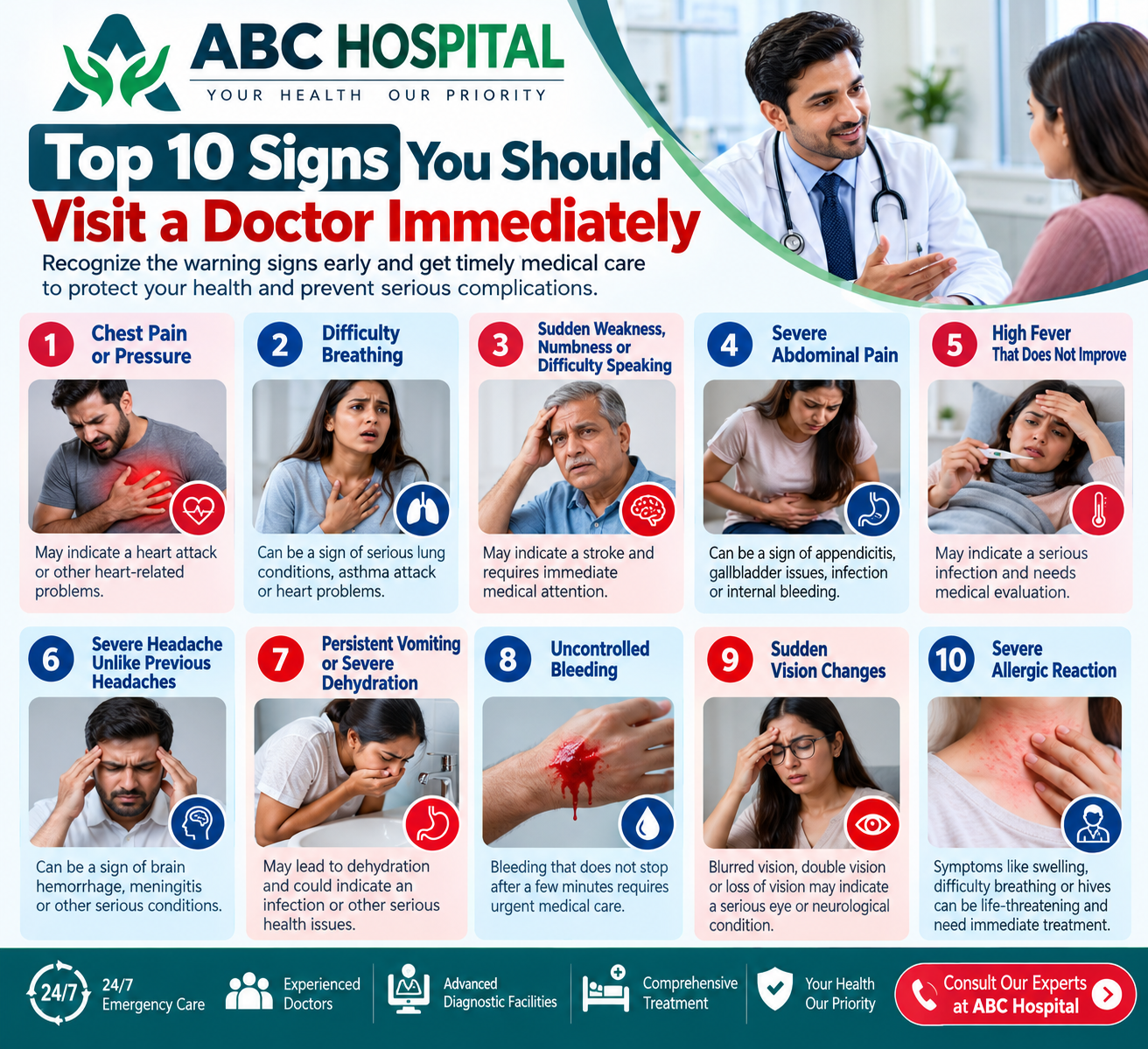
Top 10 Signs You Should Visit a Doctor Immediately
1. Chest Pain or Pressure
Chest pain is one of the most serious symptoms that should never be ignored. It may indicate a heart attack, angina, lung disease, or other cardiovascular conditions requiring urgent evaluation.
Seek immediate medical attention if chest pain is accompanied by:
- Shortness of breath
- Sweating
- Nausea or vomiting
- Pain spreading to the left arm, jaw, neck, or back
- Dizziness or fainting
Prompt diagnosis can save heart muscle and significantly improve survival.
2. Difficulty Breathing
Sudden or worsening difficulty breathing can result from asthma attacks, pneumonia, allergic reactions, heart failure, pulmonary embolism, or chronic lung disease.
Medical evaluation is essential when breathing becomes labored, rapid, or painful, especially if accompanied by bluish lips, chest tightness, or confusion.
3. Sudden Weakness, Numbness, or Difficulty Speaking
These symptoms may indicate a stroke. Immediate treatment within the first few hours dramatically improves recovery and reduces permanent disability.
Common stroke warning signs include:
- Weakness on one side of the body
- Facial drooping
- Slurred speech
- Difficulty understanding words
- Sudden confusion
- Loss of balance
Emergency care should never be delayed.
4. Severe Abdominal Pain
Persistent or intense abdominal pain may indicate appendicitis, gallbladder disease, pancreatitis, intestinal obstruction, kidney stones, ulcers, or internal bleeding.
Pain that becomes severe, spreads throughout the abdomen, or is associated with fever, vomiting, or blood in stools requires immediate medical evaluation.
5. High Fever That Does Not Improve
A persistent high fever may signal serious bacterial or viral infections that require medical treatment.
Adults should seek medical care when fever:
- Persists for several days
- Exceeds 103°F (39.4°C)
- Causes confusion
- Is accompanied by severe headache
- Occurs with breathing difficulty
- Leads to dehydration
Children and elderly patients require even closer monitoring.
6. Severe Headache Unlike Previous Headaches
A sudden, intense headache can sometimes indicate life-threatening conditions such as brain hemorrhage, meningitis, stroke, or aneurysm.
Medical evaluation becomes essential if the headache is accompanied by:
- Neck stiffness
- Vomiting
- Blurred vision
- Confusion
- Seizures
- Loss of consciousness
Prompt neurological assessment helps identify the cause quickly.
7. Persistent Vomiting or Severe Dehydration
Frequent vomiting may lead to dangerous dehydration and electrolyte imbalance. It can also indicate infections, food poisoning, intestinal blockage, pancreatitis, or neurological disorders.
Seek immediate care if vomiting is associated with:
- Blood
- Severe abdominal pain
- Inability to keep fluids down
- Reduced urination
- Extreme weakness
- Dizziness
Early treatment prevents complications.
8. Uncontrolled Bleeding
Bleeding that does not stop after applying pressure for several minutes requires urgent medical attention.
Examples include:
- Deep cuts
- Heavy nosebleeds
- Vomiting blood
- Blood in urine
- Blood in stool
- Significant injuries after accidents
Rapid treatment reduces blood loss and lowers infection risk.
9. Sudden Vision Changes
Blurred vision, double vision, loss of vision, or flashing lights may indicate retinal detachment, stroke, glaucoma, or serious neurological conditions.
Immediate examination by a healthcare professional increases the chances of preserving eyesight.
10. Severe Allergic Reaction
Anaphylaxis is a medical emergency that can develop within minutes after exposure to allergens.
Symptoms include:
- Swelling of the lips or tongue
- Difficulty breathing
- Wheezing
- Skin rash or hives
- Rapid heartbeat
- Dizziness
- Fainting
Emergency treatment is essential to prevent life-threatening complications.
Additional Symptoms That Require Prompt Medical Evaluation
Apart from the major warning signs above, consult a doctor immediately if you experience:
- Sudden confusion
- Seizures
- Loss of consciousness
- Persistent dizziness
- Severe burns
- Poisoning
- Major fractures
- Sudden swelling of the legs
- Difficulty swallowing
- Persistent unexplained weight loss
These symptoms may indicate underlying medical conditions requiring urgent diagnosis.
How ABC Hospital Provides Immediate Medical Care
At ABC Hospital, patients receive timely diagnosis and treatment through experienced physicians, emergency specialists, advanced diagnostic facilities, and modern medical technology.
Our emergency and specialty services include:
- 24/7 Emergency Care
- Cardiology
- Neurology
- General Medicine
- General Surgery
- Orthopedics
- Critical Care
- Diagnostic Laboratory
- Digital Imaging Services
- Intensive Care Unit (ICU)
Every patient receives personalized evaluation based on their symptoms and medical condition.
When Home Care Is Not Enough
Many common illnesses improve with rest, hydration, and prescribed medication. However, symptoms that rapidly worsen, persist beyond expectations, or interfere with normal body functions should never be managed solely at home.
Professional medical evaluation ensures that serious diseases are identified before they progress into emergencies.
Example
A 52-year-old man experienced mild chest discomfort after climbing stairs. Believing it was indigestion, he delayed seeking treatment. Several hours later, the pain intensified and spread to his left arm. At the emergency department, doctors diagnosed an acute heart attack. Immediate treatment restored blood flow and prevented significant heart damage.
In another case, a young woman developed sudden facial weakness and slurred speech. Her family recognized the warning signs of stroke and brought her to the hospital immediately. Early treatment significantly improved her recovery and reduced long-term neurological complications.
Expert Tips
- Never ignore sudden or severe symptoms.
- Learn the warning signs of heart attack and stroke.
- Keep emergency contact numbers readily available.
- Schedule regular health checkups for early disease detection.
- Manage chronic conditions such as diabetes and hypertension consistently.
- Stay hydrated during illness.
- Monitor high fever carefully in children and elderly family members.
- Seek medical evaluation whenever symptoms worsen unexpectedly.
Common Mistakes
- Assuming chest pain is only acidity.
- Ignoring difficulty breathing.
- Delaying medical care after stroke symptoms.
- Self-medicating persistent high fever.
- Waiting for severe abdominal pain to improve on its own.
- Ignoring sudden vision loss.
- Treating uncontrolled bleeding at home.
- Driving yourself during a medical emergency instead of seeking immediate assistance.
Conclusion
Recognizing the top signs you should visit a doctor immediately can protect your health and even save your life. Symptoms such as chest pain, breathing difficulty, sudden weakness, severe abdominal pain, uncontrolled bleeding, or high fever should never be ignored. Early diagnosis leads to faster treatment, fewer complications, and better recovery outcomes.
At ABC Hospital, our experienced healthcare professionals are committed to providing prompt emergency care, advanced diagnostics, and comprehensive treatment for patients of all ages. Seeking medical attention at the right time is one of the most important steps you can take to safeguard your health and well-being.
Top 5 FAQs
1. Which symptoms require immediate medical attention?
Chest pain, difficulty breathing, stroke symptoms, severe abdominal pain, uncontrolled bleeding, sudden vision loss, high fever with confusion, seizures, and severe allergic reactions require immediate medical evaluation.
2. When should chest pain be treated as an emergency?
Chest pain accompanied by shortness of breath, sweating, nausea, dizziness, or pain radiating to the arm, jaw, neck, or back should be treated as a medical emergency.
3. Is a high fever always dangerous?
Not always. However, a fever above 103°F (39.4°C), persistent fever, confusion, dehydration, or breathing difficulty requires prompt medical assessment.